



An Introduction to my Analysis of the LBS data

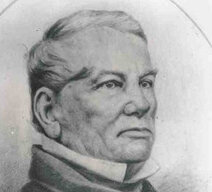
Sir Ralph Darling
My Analysis of the LBS data
As soon as I read the claims made by the piece on the University of Brighton website, Tracing Brighton’s forgotten slave-owners, and the claims by local councillors, as outlined above, I decided to investigate the accuracy of what was being said. As a student of local history and British imperial history and also as a teacher of some thirty years of History up to A level, I was not aware that Georgian Brighton was built with the money earnt from the slave trade. I was aware of the debate amongst historians on the impact of the slave trade on the industrialisation of Britain, and the way that public taste for sugar in tea, coffee etc created the demand for a continuing supply of enslaved labour from West Africa, but totally unaware that Brighton’s developers were slave owners as was being claimed.
I decided to analyse for myself the links between Brighton and the slave trade as shown by those on the LBS database who had ‘links’ with Brighton. The search engine on the LBS website, Legacies of British Slave Ownership, (https://www.ucl.ac.uk/lbs/) provided me with the names of 75 people with links to Brighton and Hove.
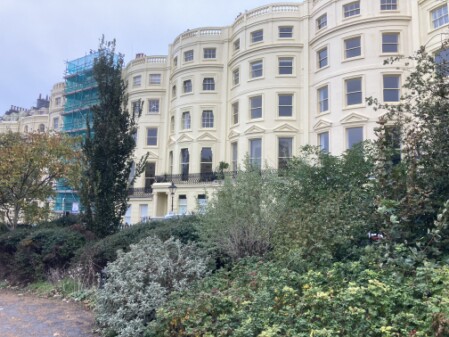
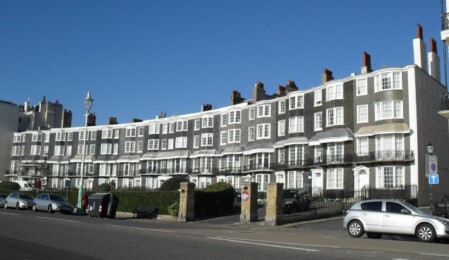
Of the 75 there were four people who had very tenuous links with Brighton.
They were:
T. Bouch, whose address was New Brighton and not Brighton
Capt T. Martin, about whom doubt was expressed by the database as to whether he was really the correct person living in Montpelier Lodge.
E. Monk, whose connection to Brighton was that he was a Director of the Brighton, Lewes and Hastings Railway. He was in fact a resident of Lewes.
J.E Walters, whose only connection is a temporary address- 9 St George’s Terrace.

Comments welcome. Please use the Contact Form
Of the remaining 71, I found there were 10 people for whom there is no evidence that they were direct beneficiaries of the slave trade.
They are:
L. Barry, who was an unsuccessful claimant.
John. M Boswell, who was due to inherit a half-share in Abbey Green Estate in St David, Jamaica, but the estate reverted to his mother and her husband.
Sir Ralph Darling, a Governor of Mauritius and New South Wales, who was not a slave-owner or claimant but had lived in the West Indies. Legacies of British Slave Ownership writes of Darling that he
“had exposure to slavery in Grenada and elsewhere in the Caribbean as a young soldier in the 1790s, and his brother William Lindsay Darling was awarded slave compensation in Dominica both in his own name and through the trustee of his marriage settlement, but Sir Ralph Darling’s conduct and attitudes in various imperial contexts were not legacies of slave-ownership, and probably not truly legacies even of slavery; his biography places more emphasis on his military background in the authoritarianism of Wellington’s armies.”
It is worth noting that, whilst he was Governor of Mauritius, he was especially tasked with the job of ending the slave trade to the plantations on the island. For more on Darling see my article here https://www.britishempire.me.uk/sir-ralph-darling.html
N. French, snr was a London merchant whose business was with the West Indies but there is no evidence that he was a plantation or slave owner.
Sarah M.B. Lowdell, like her brother, John Boswell above, was due to inherit a half share of Abbey Green estate but the estate was restored to her mother.
Margaret Mavor is described by the database as “possibly a slave owner” but there is no evidence of any claim for compensation being registered.
Ann Napier was an unsuccessful claimant.
The Rev. Kenrick Saunders was an unsuccessful claimant.
Edward Wilson was an unsuccessful claimant.
Catherine Wratislav withdrew her claim for compensation
Executors and Trustees
That left 61 people who are variously described as owners of slaves, successful claimants, mortgagees, traders in slaves (slave factors), executors and trustees. Not all of these were direct beneficiaries of the slave trade. Executors are men or women who, under the terms of a will, are required by law to carry out the wishes of the maker of the will. Sometimes the executor is a beneficiary of a will, but not always. Executors of wills relating to compensation claims have their names in the LBS database but that does not mean that they were beneficiaries of the will and therefore of compensation. Similarly, trustees are people appointed under the terms of a legal construction of a trust to carry out the purposes of the trust. The trust might have been established under a will, a marriage settlement or for the benefit of creditors. Under the terms of the Slave Compensation Commission, trustees were appointed where the compensation monies ‘belonged to or were vested in any married women, infant, lunatic or person of insane or unsound mind’. As with the executor of a will, the trustee was not necessarily a beneficiary of the will.
From the 61 people with ‘links’ to Brighton, there were 11 who were described by the LBS database as executors, trustees, mortgagees or beneficiaries of trusts. The extent to which these people benefitted financially from money earnt from the slave trade is difficult to determine. Some like Colonel W.W. Blake and A.P. Anderson held mortgages on sugar plantations and made interest on the money they lent, whilst others like R.S. Cahill and G. Monk were executors or trustees and may have benefitted. The Hon A. Macdonald and his wife the Hon Jane Macdonald were, however, beneficiaries of a trust set up under their marriage settlement and received money. Being a beneficiary, though, was not the same as being a slave owner or a successful claimant.
Residents of Brighton?
The University of Brighton press release of January 2019 and Council leader Nancy Platts’ article in the Argus on 23 June both made reference to 69 slave owners who were residents of Brighton.
I would like to address the issue as to whether the 61 people who were slave owners, receivers of compensation, executors, trustees or mortgagees were indeed residents of Brighton or Hove and when they lived in the town.
The LBS database does give some biographical information about those in the database and includes addresses and dates when known. The dates are usually from the census returns, the dates of baptisms and deaths. Of the 61 linked to Brighton and Hove, addresses are available for 37. However, I have only been able to establish that 12 from this group visited Brighton and Hove several times. It is likely that the wealthy came several times in a decade to Brighton and Hove but much more detailed research of the census, trade directories and the rate books is needed to establish how many of this group were permanent residents.
If we look at when this group visited Brighton and Hove, it appears that they came to the town late in their lives. Of the 37 for whom we have a Brighton or Hove address, 16 lived in Brighton and Hove just in the last year of their lives, with many dying in Brighton or Hove. The phrases “Living in Brighton at the time of his death”, “late of Brighton”, ‘“resided latterly at Brighton” are found in much of the biographical information in the LBS database. Of the 37 who had a Brighton or Hove address, 12 lived in Brighton or Hove in the 1860s. Much more research is needed to determine whether more of this group were visitors or residents. Given the popularity of Brighton as a seaside resort for the wealthy elite, it is more likely that Brighton or Hove was the destination for short stays of a couple of months at a time.
Just 16 came to Brighton regularly
There are just 16 people from the 61 for whom there is evidence that they came to Brighton or Hove over a period of time, and are what I would regard as residents of the town as distinct from visitors. They are: A.E. Anderson, A.R. Anderson, C.E. Anderson, Col. Blake, John Bovell, S. Coppard, T. Hankey, G.F. de Peyronnet, J. Laing, J. Montefiore, E. Murray, J. Noding, C Paine, W. Parker, Sir R. Rice and John Watson. All of these received compensation payments either in their own right or trustees with the exception of A.R. Anderson, S. Coppard, and E. Murray
The majority of these would most likely have been repeat visitors who came for the fashionable season. To describe the whole group of 61 as Brighton or Hove residents is misleading in that the majority had a main home in London and came to Brighton or Hove just for the fashionable season. There is also no evidence at all that any of this group invested money in the development of Brighton or Hove. A small number might have bought a property or taken out a long lease, but the vast majority would have rented a property for the duration of their stay.