




Benjamin Moodie
A Scottish Migrant to South Africa
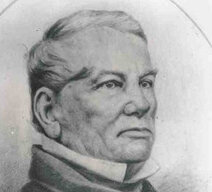
Benjamin Moodie
In 1817, Benjamin Moodie, the heir to the Melsetter estate in Orkney, decided to leave his home and emigrate to South Africa taking with him 200 indentured men and his new wife, Margaret Malcolmson. Moodie hoped that his economic plan for the men would help relieve him from the estate debts he would inherit when his father, James, died. Captain Moodie had returned from the Napoleonic Wars and was put on half-pay. Returning to the family home of Melsetter on the Orkney island of Hoy, Moodie had to run the estate as his father James, the 9th laird of Melsetter, was in poor health and living in Edinburgh.
The Moodies were an ancient and distinguished family claiming their origin from Harold MacMudah, one of the last Norse earls of Orkney. Despite their ancient origins Moodie decided to put the estate up for sale and emigrate to the Cape Colony in South Africa.
17,0000 leave Britain in five years
Between 1815 and 1820, 170,000 Britons migrated from Britain in search of a better life at a time when Britain was experiencing an economic depression and huge economic dislocation. Most of the migrants from Britain knew little of the lands they would settle in and although most were able to carve out a new life for themselves and their children there was a large minority who returned to Britain or attempted to settle elsewhere.
Peace but not prosperity
The end of the Napoleonic Wars in 1815 brought peace to Europe but it did not always bring prosperity, and for Britons it was a time of a sharp population increase combined with an industrial and industrial revolution that changed the nature of work. On the land there was enclosure and the introduction of mechanisation whilst the industrial revolution saw the introduction of steam power and the beginning of large-scale production in factories. The days of domestic production of woollen goods and the introduction of threshing machines were just two examples of how the nature of work was changing and causing large scale unemployment. With a 50% increase in the population between 1750 and 1850 together with the demobilisation of soldiers, unemployment soared in the years after 1815. Migration was increasingly seen as a way of getting rid of a surplus population. With rising food prices, and the reimposition of the Corn Laws, thousands were appealing to local parishes for poor relief. Political protest and dissatisfaction with the government increased as shown by what happened at Peterloo, Manchester on 16 August 1819 when 19 people were killed by local militia, as they tried to quell a protest involving 60,000 people. The events of Peterloo were followed in 1820 by a foiled attempt to murder members of the government in 1820 -the so-called Cato Street Conspiracy.
Benjamin demobilised
Benjamin Moodie was one of the soldiers demobilised. He had served in the Ross and Caithness Militia during the Napoleonic wars and returned to Melsetter in 1815 as a half-pay officer. He was 26 years old and returned to take over the running of the family estate on Orkney. The estate was valued at £47,000 in 1815 with debts of £23,000 and Benjamin decided to put it up for sale. He then came up with the idea of taking a group of settlers out to South Africa, a place he knew little about.
Benjamin may have known little about South Africa, but migration was something that had become quite familiar in Scotland, particularly in the Highlands and Islands. Between 1773 and 1776 18% of all British migrants came from the Highlands and Islands. People were leaving in large numbers, often in family or extended family groups, to get away from the social dislocation caused by the re-organisation of highland estates as multiple farms on estates gave way to single tenant farms for cattle ranching and commercial sheep farming. Newly created crofting communities were created to house evicted farmers, but many people preferred to migrate to places where there was an abundance of freehold land that was often free or subsidised. The most popular destination was the Americas where there was abundant freehold land, affordable passages and often letters home from previous migrants with tales of the wonderful opportunities available.
By 1815 emigration was a familiar part of life throughout Scotland. Migration had slowed down during the American Wars with the colonies and during the Napoleonic Wars when emigration became very expensive but with peace in 1815, migration was seen as a way of seeking a better life. Although the government did little itself to encourage migration, there were a number of government schemes in the years after 1815 including several small-scale projects to settle parts of Canada around Quebec with Scottish migrants, and the 1820 scheme to settle almost 5,000 settlers in the Eastern Cape of South Africa.
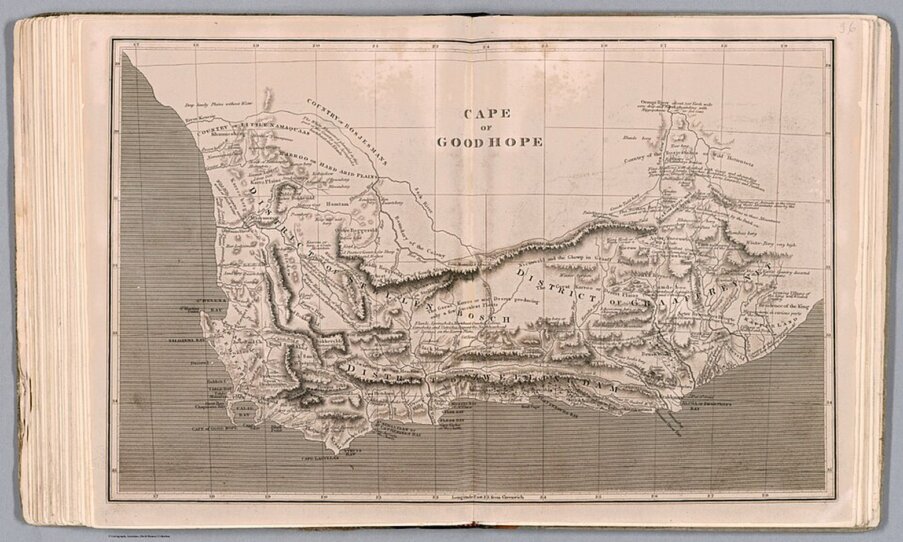
The Cape Colony 1820
Benjamin approached the British government for financial support for his idea of taking settlers to South Africa. He received a letter back from the government saying that ‘His Majesty’s Government have at no time given any special advantage or encouragement to persons proceeding as settlers to the Cape of Good Hope and consequently cannot deviate in your favour from the established practice.’ Despite the rejection, Benjamin decided to proceed with his plan which was to take out skilled men to Cape Town and then hire them out to the established settler community. He hoped this would generate enough money to restore the family fortunes.
Although Benjamin hoped to recruit single men mainly from rural areas, in the end most of the men came from the Leith area. Many had been evicted from the estates of the 8th Marquis of Stafford. They were generally 18-25 and skilled. 1,500 applied out of which 200 were chosen. The applicants had to provide character references and evidence of apprenticeships they had served. They were required to pay for their own passage (£30) although men were taken even if they could not afford the passage, but this cost was added to the cost of indenture. All the men had to sign indenture papers agreeing to be hired out or in some cases sold.
Sailing to Cape Town
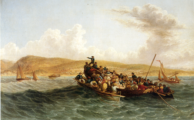
The first group of 52 men set sail on the ‘Brilliant’ on 14 March 1817 with William Young as master of the ship and with Benjamin aboard, arriving in Cape Town on 14 June. Donald, a younger brother remained behind to help with the arrangements for the remaining men. There were two further sailings – the ‘Garland’ which left Gravesend on 6 May arriving on 23 August with 49 men aboard and the ‘Clyde’ which arrived on 23 March 1818 with 89 men aboard.
The Cape Town colony had only recently been taken over by the British- in 1806 during the Napoleonic wars to prevent it getting into the hands of the French. It was then a slave owning outpost of the Dutch who had established Cape Town in the 1650s as a supply base for ships sailing to the Dutch East Indies. The white population, descendants of Dutch, German and French Huguenot settlers was about 25,000 who lived in and around Cape Town. The land was fertile with a Mediterranean climate, but the settlers relied on slave labour brought in from Africa and Asia. The native population of Khoikhoi and San people had been subdued and had lost most of their land during the period of Dutch control and now served as labourers. The total population was about 75,000. Following the formal handing over of Cape Town to the British in 1815, the Governor, Lord Somerset, began the task of changing the colony to an English speaking territory with English laws and customs. The eastern border of the colony had become contested with the Xhosa people, and frequent cattle raids and attacks on isolated farms were a feature of life there.
Most of the existing population of the Cape Colony were Boer farmers who depended on the labour of foreign slaves. When the British began to introduce laws to bring the colony into line with established laws elsewhere in the British Empire, this caused huge resentment amongst the Boer population. As British missionaries began to arrive and establish mission stations and then call for better treatment and civil rights for the indigenous population, relations with the British authorities got worse.
Groot Vader Bosch bought
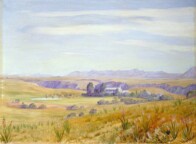
The Boers were a fiercely independent people and soon began to search for territory beyond British jurisdiction where they could continue to hold slaves and live their own lives. This brought the Boers into contact with the Xhosa on the eastern frontier of the colony. The British authorities wanted Benjamin Moodie to take his party of settlers and settle on the eastern frontier in the Zuurveld and to help in the defence of the eastern frontier against the Xhosa. Moodie refused and instead, in 1819, purchased a farm, Groot Vader Bosch (GVB), along the Langeberg Mountain Range between Swellendam and Heidelberg. Most of the first group of men who had travelled on the ‘Brilliant’ were found work, so Moodie was able to recoup some of his costs however finding people to take on indentured men became more difficult as the other ships arrived. Men started to refuse to take up the work they were required by their bond to do, and some simply deserted. The Boer population resented the use of Europeans as indentured servants for unskilled work as they believed this was the work of slaves. Moodie had been forced to enter into an agreement with a local merchant, Hamilton Ross, by which Ross became a partner and gave Moodie money, but Ross soon withdrew from the partnership and Moodie had to pay him back by handing over 50 indentures to Ross. To secure a loan of £3,750 from the Homeland Bank, Moodie had to hand over all his remaining indentures as security on the loan. He later bought a farm at White Sands at the mouth of the Brede River to which he moved.
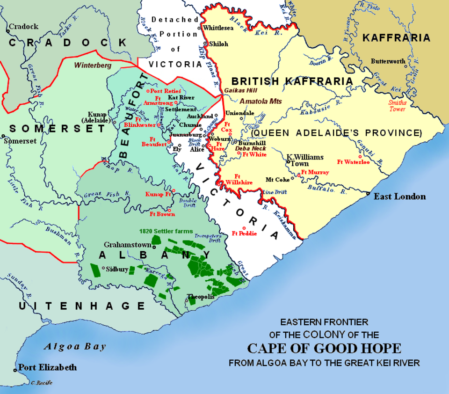
The Eastern Frontier
Moodie found work for some of the indentured men on his farm chopping wood, and also, he gained the contract for constructing the Cape Town to Simonstown road, but this only lasted a year. There was however insufficient work for the indentured men. Many like Colin Bain deserted. He managed to escape on a boat out of Cape Town bound for Ascencion Island where he found work as a cooper. William Jacobs was hired out to a Mr Holmes as a labourer, deserted, as did John Gruar, a cooper. Another cooper, John Matheson deserted but was caught and brought back and fined whereupon he deserted again only to be captured again and fined double the amount from the first escape.
Each fine was added to the amount of the indenture. There was little freedom of movement as a pass was needed to travel outside of Cape Town. Disobeying orders incurred a fine which was again added to the amount of the indenture. Every item given to the men incurred a cost which was added to the cost of obtaining eventual freedom. A coffin for a loved one, new clothes and shoes, medicines all incurred a cost added to the indenture. Eventually Moodie was able to sell most of the indentures he held.
Benjamin Moodie was followed to South Africa by his two brothers., Donald and John. John, who had been a second lieutenant in the 21st Royal North Fusiliers and been seriously wounded in the Netherlands received a military pension for two years and was placed on half pay in 1816, arrived at the Cape in September 1819 and took a half share in GVB which he managed. Donald, unlike his brothers who had joined the army during the Napoleon wars, joined the navy in 1808, retiring as a lieutenant on half pay in 1816. He helped with organising the second and third sailings to the cape and then in 1820 left for India but got no further than Cape Town where he decided to stay and join his brothers.
The brothers together
In 1821, the three brothers joined a semi-military settlement at Fredericksburg beyond the Fish River in neutral territory. The settlement collapsed but the brothers were given 8,000 morgen of virgin forest land west of the Fish River by the colonial government . Benjamin established Long Hope and Hoy farms on which he grew wheat and timber. The farms prospered and Ben helped his brother Donald and other settlers to establish Port Francis(now Port Alfred) as an alternative port to Algoa.
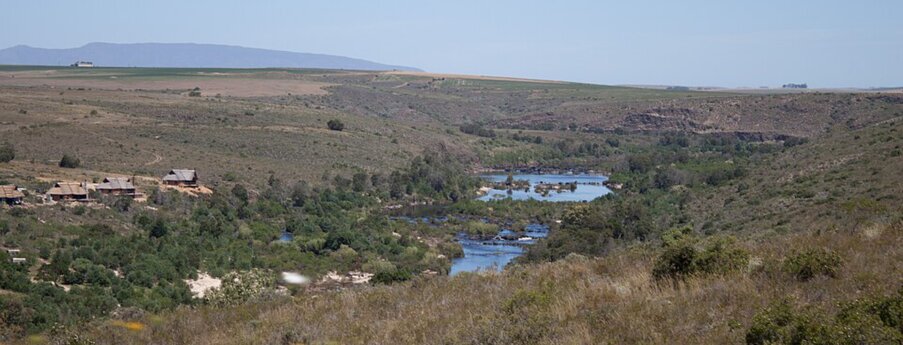
The Brede River near Swellendam
Elected as an elder for Swellendam
In 1825 Benjamin sold Long Hope farm and returned to Swellendam. John remained on the eastern frontier however his farm buildings and cultivated lands were swept away by the floods of October 1823. John wrote of the utter isolation in which they passed their days and nights. Meanwhile Donald was establishing Port Francis and during this time met and married Sophia Pigot. The couple lived at Pigot Park, whilst John engaged a friend to manage his farms and moved to Grahamstown. John, disillusioned with his attempts at farming, eventually left South Africa because he couldn’t see any way that he could support a wife there
Return to Scotland
In 1838, Benjamin’s wife, Margaret, died and he returned to Britain where he married Susan Barnett. Benjamin also met during the course of his time in Britain, E.S. Wakefield, the pioneer of scientific migration policies. Wakefield persuaded Benjamin to be an agent for the newly established ‘South African Association’ . Wakefield’s emigration schemes were based on being able to buy land from the government at a price which enabled the scheme to subsidise the migration of would-be settlers by paying for the passage. The ‘South African Association’ was not a success though as it was difficult to attract would be settlers to migrate to an area in which there was continual warfare with the Xhosa tribes. Whilst he was in Britain, Benjamin also agreed to assist the ‘Children’s Friendly Society’ by taking 21 children with him when he returned. He returned in 1841 with his new wife and the 21orphanded children, who when the Society was dissolved, joined him at GVB until they were old enough to go into paid employment.
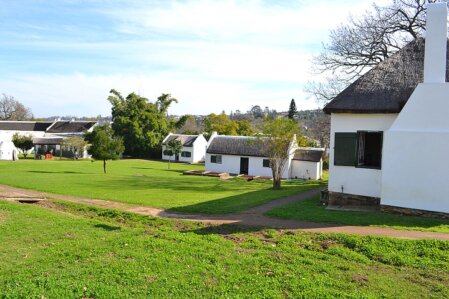
The historical village of Swellendam -part of the museum
Chosen to represent Swellendam in parliament
In 1850 Benjamin moved to his Westfield estate where he lived in semi-retirement until his death on 1 April 1856. He was also chosen as the Swellendam representative for the Cape Colony legislative council and played a part in the drafting the constitution for the Cape Colony which introduced representative government in 1854 with the election of the first parliament on the basis of multi-racial Cape Qualified Franchise.
Cape residents qualified as voters on a universal minimum level of property regardless of race. Benjamin continued to live in Westfield until he died on 1 April 1856. Benjamin’s second son, Thomas, continued to run Groot Vaders Bosch and also represent Swellendam in the Cape Town parliament from 1864 until 1883
Conclusion
Benjamin Moodie’s initial scheme involving indentured servants was not the success that Benjamin had hoped for. His partner let him down, leaving him in financial straits and many of the men with indenture bonds deserted. Benjamin ended up having to sell his indenture bonds or using them as surety for bank loans, but he was to make a success of the farms he acquired, and he and Scottish settles played an important part in the development of Swellendam as a town on the Cape Wagon Road to the northeast. Many of the skilled workers in the town – wheelwrights, millers, builders, carpenters, and surveyors, were Scottish settlers who had come with Benjamin Moodie or were descendants of them. Before the arrival of the British, Swellendam had a population of about 6,500 (1798) which included 2196 slaves but by 1829, following the arrival of Scottish settlers, an extra street had been added along with 50 dwellings.
By Peter Crowhurst
July 2026
Further Reading:
Website of Ancestry Research, South Africa
Marjory Harper and Stephen Constantine, Migration and Empire, Oxford 2010
Fiona Grahame, The Orkney News
Martin Meredith, Diamonds, Gold and War, Pocket Books, 2007