




Conclusion
Final Conclusion
It is clear to me that as yet there is insufficient evidence to demonstrate that that a) a significant number of awardees of slave compensation lived in, or owned properties in, Brighton; b) many of whom invested in the new luxury housing developments springing up along the seafront to the east; c) colonial wealth extracted from the other side of the Atlantic, which also congealed in the city’s brick and flint.
Just ten people who were residents and received compensation
I have found just 10 names of people who lived in Brighton for more than one year and received compensation in their own right. Most of this group would have been occasional visitors to Brighton. Much more research needs to be done to say that this group were Brighton residents rather than visitors. I have not been able to find any evidence of how many of this group - or indeed the whole group of 61 - invested in the seafront.
Most of the luxury housing developments in which this group lived were competed by 1830. The compensation payments, though, were made after the Slavery Abolition Act of 1833. The LBS database gives details of when compensation payments were made and most of the payments to this group were made after 1835. Most of the Kemp Town estate was built in the 1820s and Marine Parade was developed from the early 19th century and continued to be developed throughout the century, especially after the completion of the Madeira seawall in the 1830s. There is no evidence at all that these developments were completed with slave compensation money. The LBS database does record the business interests of those on its database and also investments in railways, but I have not as yet found any evidence that any of this group invested in the development of Brighton and Hove.
As for the claim that “Sixty-nine slave-owners and former slave-owners had a property in Brighton or Hove in the 19th century”, this is based on the assumption that everyone on the LBS database was a slave owner. As I have explained, and as is made clear by LBS, this is a database of those who appear in the records of the Slave Compensation Commission, not all of whom were slaveowners. Many were beneficiaries of slavery but not slave owners, and there are many names on the database who had nothing to do with slavery or were refused compensation.
Nancy Platts's claims
Nancy Platts claimed that
“It is important that we reflect on Brighton and Hove’s Georgian history which meant much of the investment that led to its growth came from Caribbean sugar plantations and the enslavement of people.” And that “It is troubling that many of the city’s buildings exist because of that brutal trade and 69 slave-owners and former slave owners had a Brighton or Hove address between 1800 and 1880. Most of them -unlike the freed slaves- received substantial financial compensation on abolition of slavery in the 1830s.”
No evidence at all has been provided to substantiate these assertions. Georgian Brighton was largely built by T.R. Kemp, C. Busby, A. Wilds and A.H. Wilds together with local landowners and builders. Compensation money was only available after 1830, the year that George IV died, and could not have been used to develop Georgian Brighton.
The railway did received compensation money
There were though aspects of Brighton that were developed with slave compensation money. The LBS database provides details of investments in the growth of railways in the 1840s, a decade of ‘Railwaymania’ as investors were putting their money into the building of numerous railway lines all over England. The parliamentary bill for the formation of the London to Brighton line was given to John Rennie on 15 July 1837 and, following a detailed survey, work on the line began in July 1838. The line, which was the shortest of the various schemes proposed, took three years to build at a cost of over £2,000,000 or £40,000 a mile. We know from the LBS database that £91,000 of the total cost came from people who had received slave compensation payments although, when looked at closer, the amounts that were given as slave compensation nowhere near matched what was invested. The largest investor in the Rennie railway was R. Sutton jun., who received £2,895 in compensation payments but invested £54,750 in the railway. E. Monk, a Lewes brewer and a director of the Brighton, Lewes and Hastings railway received just over £800 in slave compensation but invested a total of £61,875 in the Brighton to Chichester line and the Brighton, Lewes and Hastings line.
The town of Brighton clearly benefitted from the arrival of the railway in September 1841 as it produced a spurt in development and the transformation of Brighton into a seaside resort that catered for not just the most wealthy, but also for the growing middle classes and the working class. The availability of slave compensation money helped to transform the transport fabric of Britain. A total of 6,220 miles of railway line were built as a result of projects authorised between 1844 and 1846 (the modern UK railway network is around 11,000 miles). The compensation payments and the profits from the slave trade came at a time when Britain was undergoing an industrial revolution and the two are not unconnected although the extent to which the slave trade and the compensation from abolition of slavery were responsible is difficult to state.
Indirect impact of the slave trade on Brighton & Hove
The Slave Trade and slavery in the Caribbean existed to meet a demand by the British people for sugar. What began as a luxury became an everyday item in the late18th century. Drinking tea and taking tea became an important part of everyday life for all classes. Sugar provided essential carbohydrates for the poor family that could only afford enough potatoes for the working man of the house, and it was also an essential part of the fashionable life of the wealthy. The taking of afternoon tea with cakes and pastries sweetened with sugar was certainly a part of the fashionable life of the wealthy classes that visited Brighton, and to supply this demand there would have been merchants in Brighton. The British may not have begun the trade in African labour, but they certainly perfected it and developed it on a huge scale to meet the demand for sugar from British households.
The loss of the American colonies and the abolition of the slave trade led to more black people in Britain and was the beginning of a more diversified British society. During the war with the American colonies, both sides tried to attract slaves to their side. The British offered them their freedom but, once the war was lost, those slaves moved to Canada, Britain and eventually Sierra Leone. By 1785 there were about 1,000 former slaves in London living as refugees. They received little help until philanthropists developed a scheme to take them to Sierra Leone and resettle them there. Eventually over 400 were persuaded to go but many stayed behind in London, becoming part of the embryonic campaign to abolish the slave trade.
There was therefore a small community of black people in London at the beginning of the c19th and, although most worked as servants, there were those who set themselves up as businessmen. One such person was Sake Dene Mahomet, (a former sepoy in the East Indian Company army), who opened the first curry house in London in 1809 and later established a Steam and Seawater Medicated baths in Brighton, eventually becoming George IV’s Shampooing Surgeon. His business thrived in Brighton and his children went on to establish themselves in Brighton life. Frederick, his son, set up a dancing and fencing school in what is now the Waggon and Horses public house whilst his grandson, Frederick, became the first doctor to link high blood pressure with kidney damage.
Other black people to be associated with Brighton were Sara Forbes Bonetta and Thomas Highflyer. Bonetta, a princess of the Yoruba people, was rescued by a British naval captain from a life of slavery, following her capture by the Dahomeyan army, and then brought to England and introduced to Queen Victoria. She eventually got married in Brighton to a Yoruba businessman before settling back in west Africa. Highflyer was a former slave from east Africa who was rescued in 1866 by HMS Highflyer of the British anti-slavery patrol. Back in Britain, Highflyer settled in Brighton where he lived in Great College Street and attended St Mark’s School.
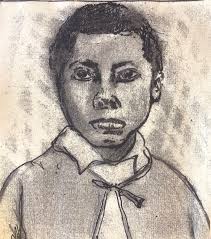
Thomas Highflyer
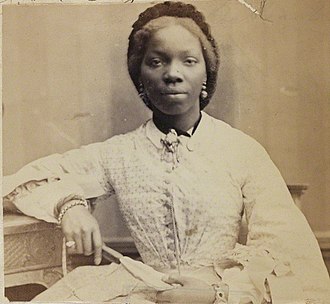
Sara Bonetta
Something to be proud of?
The abolition of slavery was portrayed for decades as something the British should be proud of, and indicative of a liberal and moral empire. It came at a time, though, when British missionaries were being sent all over the world and when Britain dominated the world economically and militarily. This dominance gave the British the confidence to believe it was their duty to redeem the world and to improve other races. It bred an arrogance and a belief that the British were different – British exceptionalism. Palmerston said of the British and the empire in 1848, “It is our duty - our vacation is not to enslave, but to set free; and I may say without any vainglorious boast, or without great offence to anyone that we stand at the head of moral, social and political civilisation. Our task is to lead the way and direct the march of other nations.”
A universal humanity?
The idea of there being a universal humanity had been largely accepted in Europe until the mid-19th century but, with the gap between the developed world and the undeveloped increasing, people began to question previously held beliefs. Missionaries had gone to India and Africa believing that it was possible to ‘Convert, Christianise and Civilise’ local indigenous peoples but, when the rate of conversion was not what had been hoped, missionaries began to doubt what they were doing. Livingstone himself had little success in converting natives in South Africa and soon turned to exploring the land. In the late Victorian era, attitudes towards native peoples changed and the writings of Knox and the interpretation given to Darwin’s books convinced many that native people were incapable of advancement. Races were increasingly ranked in hierarchical order, with the Victorians assigning rank on the basis of economic and social progress. Social Darwinist ideas on race struggle reinforced the views of those who were now turning to polygenesis as an explanation for race. The development of the slave based economy in the Caribbean had been justified by portraying the black slave as a savage and a barbarian, but abolition of slavery did not end this attitude. Instead, the New Imperialism of the late 19th century led to theories of race which continued to portray black people as incapable of development.
Britain was transformed by the Slave Trade
Prior to the abolition of slavery, the bulk of British overseas trade went to the western hemisphere – mainly the USA and the Caribbean. Following abolition and the relative decline of the West Indian plantations, more investments were made in the eastern hemisphere as India and Australasia became more and more important to the empire. The Montefiore brothers are an example of a family that prior to 1834 had concentrated its trading connections with the Americas. Jacob (who later lived in Brunswick Square) and his brother began to develop trading connections in New South Wales and South Australia with Jacob becoming a central figure in the settlement of South Australia, and his brother Joseph making his fortune from banking in New South Wales. Although the USA remained the preferred choice of settlers, Australia and New Zealand were also popular destinations for would-be migrants. Sir Ralph Darling, who also lived in Brunswick Square, was Governor of New South Wales prior to the Montefiore brothers’ interests in Australia.
The LBS project demonstrates the extent to which Caribbean estates were owned by absentee owners in England and also how many of these owners were described as merchants. It claims that 2,900 slave owners lived in England, with Cornelius Paine and Thomson Hankey being perfect examples of this phenomenon. Hankey was described as a West India merchant, but his company had substantial interests in West Indian plantations as did Paine who was the only born and bred Brighton man amongst my group of 75 and whose company were the mortgagees of Hill's Farrels and Bugbyhole estates. The extent to which London merchants had interests in the Caribbean has been revealed by the LBS project, interests which previously had been concealed.
The wealthy elite and compensation payments
What was also revealed by the study was the widespread distribution of slave compensation payments amongst the wealthy elite in Britain. Around 50% of the 20 million pounds given out remained in Britain and, although much of this was invested, much was used to fund the extravagant lifestyles of the rich. 5% of British elites appeared in the records of the Slave Compensation Commission with a disproportionate number living in the south west and south east. Such a person who lived off her compensation payments was Georgina Frances de Peyronnet, who received £11,279 and used it to tour Europe until, towards the end of her life, she settled in Brighton to live out her days.
Clearly any community with residents, whether temporary or permanent, was going to benefit from those who had received slave compensation money and spent it in that community. Residents in Brighton who let their properties to the rich and who provided services in the form of food, drink and entertainment benefitted from the likes of Georgina de Peyronnet living there.
The wealthy elites who received compensation money continued to be a very influential force in British society. They invested in the development of British industry, and in large houses in the country. They also involved themselves in philanthropic activities. Thomson Hankey, who lived in Brunswick Square for many years, set up a charity in January 1854 and endowed it with £10,000 for the benefit of widows, sons and daughters of Church of England clergymen. Whether Brighton residents benefitted from this charity which continued until 1994 is difficult to ascertain.
The expansion of public schools
The expansion of the public school system in Britain in the mid-19th century was helped with money from slave compensation payments. Brighton was nick-named School Town as a result of the town having so many small private schools. In 1851 the educational census showed there were 189 private schools in Brighton with over 4,000 children. It is difficult to imagine that slave compensation money did not play some part in the founding of some of these schools, but it is difficult to provide the financial evidence.
Finally
There is no doubt that the Slave Trade had an impact on Brighton and Hove as well as everywhere else in the country, once the town had developed into a seaside resort for the wealthy elite of Britain. The social life of the nation had changed with the importing of sugar and tea on a large scale. The factory system had been developed with the use of credit provided by banks and merchant houses, which had made their money from the slave trade. The transport system had been partly funded with money made in the slave trade, firstly the canals in the late 18th century and then the railways in the 1840s. The huge expansion of the railway system came at a time when the Slave Compensation Commission was making huge payments to former plantation owners, and everyone else who was claiming compensation. Many of those receiving compensation payments (e.g.Thomson Hankey) set up charities from which the less well-off benefitted. Brighton being School Town for the children of the wealthy elite no doubt benefitted from such charitable donations.
Another impact that was little discussed until recently is how the slave trade and its abolition increased racist attitudes in Britain. The enslaved were regarded as inferior by their white masters in order to justify their harsh and inhumane treatment and even after abolition of the slave trade and slavery itself, the economic and military dominance British enjoyed in the 19th century increased the feelings of superiority the British felt. There remains a legacy of such attitudes in Britain today.
What we cannot say though is that Brighton and Hove was developed with the money made from the slave trade, or by people involved in the slave trade. There is no money trail linking Brighton and Hove’s development in the 19th century with anyone on the LBS database, and no evidence has been forthcoming linking individuals with particular building projects, except for Royal Crescent. The inclusion of someone on the LBS database is not proof in itself that that person invested in Brighton and Hove’s development: in fact, most of those who came to Brighton and Hove and whose names are on the LBS database came in the later part of their lives, well after Brighton and Hove had been developed. Part of the money they spent in Brighton and Hove may have been earnt from the slave trade or have been part of the money the SCC paid out, but it not possible to determine which elements had been earnt from the slave trade.
Developed by local people
Brighton and Hove were developed largely by local people who lived here, and with money that had been generated from local industry and commerce. Many of those involved in the slave trade did however live in Britain, and links between West Indian estates, the planters and merchants were hidden from public view for centuries only to be revealed by the work of The Centre for the Study of the Legacies of British Slave-ownership. It is possible that more may be revealed in time about links between those on the LBS database with Brighton and Hove links, and the development of Brighton and Hove, but until we have solid evidence linking individuals with either investment in building projects, the development of buildings, or the purchase of such buildings, we cannot say that Georgian Brighton and Hove was built with wealth derived from the slave trade or the payments made by the SCC.
Peter Crowhurst, December 2020
Further Reading
Legacies of British Slave-ownership website, https://www.ucl.ac.uk/lbs/
Antrim, N, and Morrice, R, Brighton and Hove,
London, 2008
Berry, Sue, Georgian Brighton, Chichester,
2005
Blackburn, R, The Making of New World Slavery,
London, 1997
Carder, T, The Encyclopaedia of Brighton, Lewes,
1990
Donnington, K, A Society Built on Slavery,
History Today, Vol65/9
Ferguson, N, Empire How Britain made the Modern
World, London, 2003
Gilbert, E, Brighton Old Ocean’ Baubles,
London, 1954
Hall, C, Draper, N, McClelland, Donington, K, Lang,
R, Legacies of British Slave Ownership, Cambridge, 2014
School of Architecture and Interior Design, A
Guide to the Buildings of Brighton, Brighton
Shillington, K, British Made: Abolition
and the African Trade, History Today Vol 57/3
Walvin, J, A Short History of Slavery,
London, 2007
Walvin, J, The Trader, The Owner, The Slave,
London, 2007
Walvin, J, Slavery and the British, History
Today Vol 52/3