




The Early History of Australia
The Pacific was a dangerous place
Travelling to the Pacific in the 18th century was a test of man’s ability to cope with wilderness, loneliness, insufficient food and water, the unfamiliar and constant danger. Few men attempted to make the journey onto the unknown and even when voyages of exploration were planned, sailors jumped ship before the voyage had even started. The invention of an accurate chronometer in the 1760s made it possible to measure accurately and reduced the likelihood of ships going wildly off course and the increased use of lime and lemon juice reduced the risk of scurvy. Even so sailors continued to desert.
What news about the Pacific that was brought back to Britain created huge interest and excitement and when Cook set sail on his first voyage to the Pacific in 1768, his return was waited for with much anticipation. Cook was probably the most gifted navigator of his age. He had risen through the ranks of the Royal Navy through his own talent, and he commanded international respect.
Cook's achievements
Cook’s three voyages between 1768 and 1779 opened up a hitherto secret world to European society with geographical, scientific and anthropological knowledge. Cook published his own journals to a world eager to know more about an unknown part f the world. He was not interested in knowledge for its own sake but sought to discover products that would benefit European civilisation. When he discovered and recorded new plants it was with the hope that they might in some way be used. Products like cotton and tobacco had been discovered in the western hemisphere and had helped to promote economic growth and a consumer revolution. What might be found in the Pacific?
In the three years of their first voyage, Cook’s ship the Endeavour visited Tahiti and then south towards New Zealand and the eastern seaboard of Australia. he then sailed northwards along the Great Barrier Reef and through the Torres Strait. He had a mandate to declare British sovereignty over any territory that was uninhabited or whose inhabitants were not making good use of their land. His view of the aborigines that he came across was that they were not exploiting the land in the way that Chief Justice Blackstone required and so Cook felt justified in declaring Australia terra nullus and annexed it on behalf of the British government.
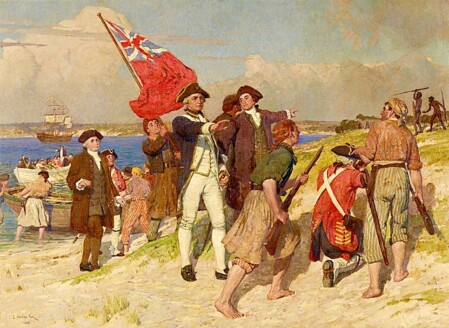
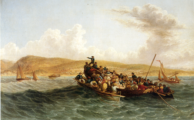
The landing of Lt James Cook at Botany Bay
The penal colony was Bank's idea
By the time Cook died in Tahiti in a fight with natives in February 1779, little had been done to exploit the land that Cook had discovered for Britain, but he had broken the barriers to sailing to the Pacific. Within a few years whaling and sealing ships from the USA were sailing to Australia and New Zealand and establishing bases.
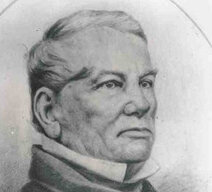
Joseph Banks
It was the gentleman naturalist Joseph Banks, who had sailed with Cook on his first voyage, who believed the soil and climate made New South Wales an ideal place for future settlement. In 1779 he urged that the government use the harbour of Botany Bay as a penal colony.
The loss of the American colonies had stopped the flow of convicts there and when there was a crime wave in Britain in the 1780s which worsened the overcrowding in prisons the government realised the importance of transportation but couldn’t agree on the right location. Gambia was discussed as a better option as it was not so far away, but the climate and death rate there eventually forced the government to reject west Africa as an option. Gradually government officials realised the potential strategic value of having a presence in Australia, especially as the Spanish and French were competing for territory in the Pacific region.
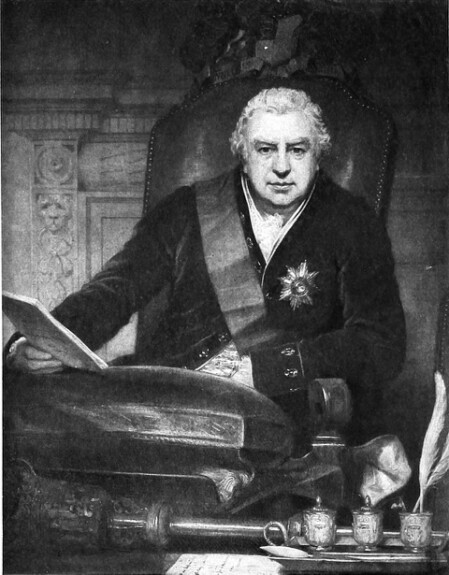
Joseph Banks
Transportation also offered for some the possibility of redemption and a chance tor return to society. During Governor’s Macquarie’s governorship, he believed transportation could show the criminal the error of his or her ways. He went as far as offering criminals who had served their time the opportunity of serving the colony as government officials. For Macquarie the colony could be a reforming institution.
The First Fleet sets sail
The government accepted Bank’s idea and in May 1787 the First Fleet under the command of Captain Phillip set sail for Australia with 548 male and 188 female convicts aboard including a nine year old chimney sweep, John Hudson, convicted for stealing some clothes and a pistol. The eleven ship fleet sailed into Botany Bay in January 1788, although Phillip found the harbour unsatisfactory and sailed on to a better harbour named Sydney after the Colonial Secretary of the time.
The majority of those setting foot on Australian soil were young repeat offenders, mainly small time criminals guilty of theft. Few had the skills required to set up a colony, homes and establish a means of producing food. Disembarkation began on 27 January with the men, the women following on 6 February by which time the ground had been cleared and basic shacks had been constructed and the livestock landed. A sawpit, cookhouse and a blacksmith’s forge wee begun. When the women began to disembark the men wee given an extra ration of grog to celebrate and what followed was a night long session of drinking and sexual excess by convicts and guards. It only came to a halt when there was a violent storm of lightning, rain and thunder. The following day, Captain Phillip addressed all those present promising to reward hard work and virtue and to punish indolence and vice.
A society to replicate that in Britain
It was hoped by the organisers of the expedition that the convicts would create a self-sufficient colony which would mirror the economic and social hierarchy in Britain. It was expected that judicial and legislative power would lie in the hands of the former marine and army officers who had exercised authority over the convicts during the outward voyage and would continue to exercise this power. The convicts though were reluctant to work and as escape was difficult and discouraged by harsh punishment, relations between the convicts and those exercising power was difficult. Many convicts turned to crime and even the officers became less and less optimistic about the colony’s future. Governor Phillip though remained steadfast in his commitment to the ideals she had set out. Both officers and convicts considered that they were in the wort place on earth with barren soil and a scarcity of food and vegetation. They regarded themselves as being alien creatures in a strange land where there were flying foxes, koalas and kangaroos.
The convicts had to serve sentences of either seven or eleven years before receiving their freedom but from 1791 the government began to make it difficult for convicts to return to Britain. Grants of and were offered to persuade them to stay and help establish a viable colony. In 1794, 60 women arrived in the colony to help create more families and in the same year those who were still serving sentences wee allowed to earn 5p an hour for work done in their own time.
The first few years of the settlement were very difficult and there were times when the colony was close to starvation. Homes were just dirt hovels of twigs and despite the clearing of more ground at Parramatta, insufficient food was being grown. The arrival of the Second Fleet with its supplies failed to arrive and rations had to be cut. Men sold whatever they had to buy bread and worked in almost no clothes whilst women sold their bodies to avoid starvation.
The Second Fleet
The Second Fleet consisting of six ships - four transport ships and two storeships did eventually arrive arrived in Sydney Cove in 1790. Three of the transport ships carried mostly male convicts and the other transport ship, The Lady Juliana, only carried women. The Lady Juliana was the first all-female transport ship and the female population of Sydney more than doubled when it arrived. Moreover, the convicts were in a terrible condition. The convicts on all the ships were mistreated, rations were poor, and sickness rife. Of the approximate 1250 male convicts, over 25% died en-route to New South Wales (in comparison to just 2.8% of those on the First Fleet) and many more died within a year of reaching Sydney. Almost half of the convicts who arrived in Sydney required immediate hospitalisation and about eighty died within three weeks of arrival. The arrival of more convicts did nothing to alleviate the lack of supplies as they put an extra burden on the existing population but gradually, with the arrival of more aid, conditions began to improve.
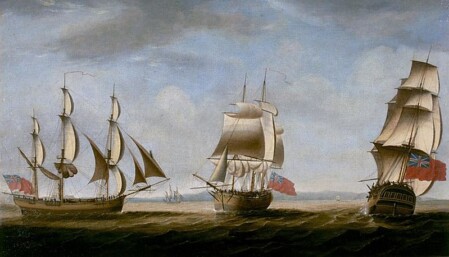
HMS Borrowdale, supply ship to the First Fleet
A new type of felon
By the time Governor Philip returned to Britain in 1791 settlers and
convicts alike were beginning to see a future for the new colony and wee even extolling
its virtues. The next ten years saw the arrival a new type of felon – convicts who
had been convicted for political crimes. These included the Scottish Martyrs
found guilty of disseminating revolutionary tracts and Irish Nationalists,
many of whom had taken part in the 1898 rebellion.
A divided society
New South Wales continued to be a divided society with no institution or
person able to bring the disparate elements together. The majority of the
colony’s population did not want to be there and the introduction of these ‘political’
felons increased the level of discontent. In 1804 an uprising was planned
amongst some of the convicts. It was dealt with quickly enough, but discontent
festered. By this time, some convicts had served their time and had acquired
land but continual shortages of food and supplies together with the difficulty
of establishing a profitable farm encouraged corruption and deceit. The rum rebellion
of 1808, when the authority of Governor Bligh was challenged, was the result of this ongoing discontent.
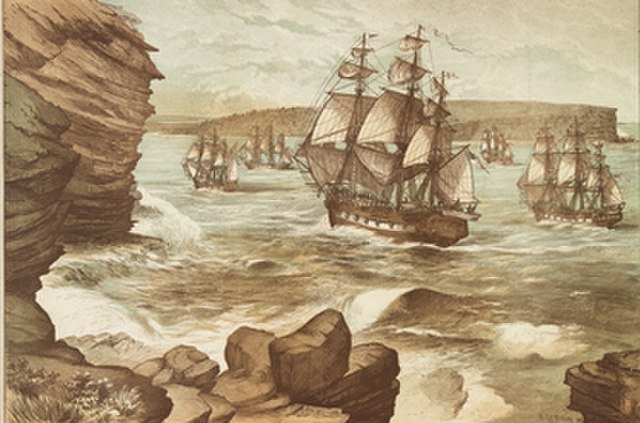
The First Fleet entering Port Jackson
By Peter Crowhurst, September, 2022
Piers Brendon, The Decline and Fall of the Britiosh Empire, 2007
Lawrence James, The Rise and Fall of the British Empire, 1998
Australian Dictionary of Biography