
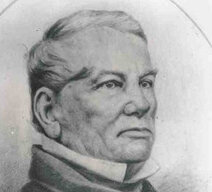




Sir Henry Hesketh Bell
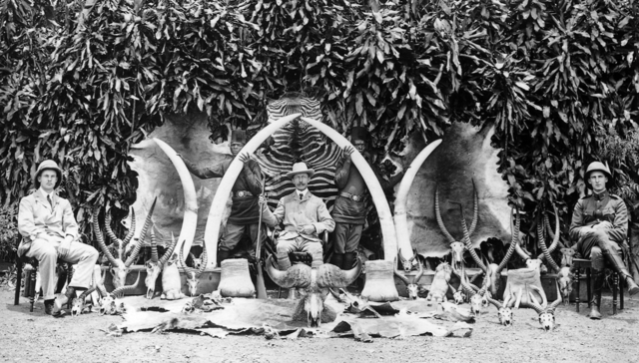
He entered the service of the Colonial Office as a supervisor of customs
Henry Bell was born in France and spent his childhood moving from one
private school to another in the Channel Islands, Brussels and Paris. He was a
fastidious youth, educated in music and drawing and fluent in French. He was
learning German in Stuttgart when a
family friend, the Governor of Barbados, Sir William Robinson, offered him the
post of third secretary in his office at the salary of £100 a year. A life in
the Colonial Service beckoned. He only lasted ten months in Barbados as his
eyes were weak, but he was then transferred to Grenada where he became
interested in the superstitions of the former slaves he met. Bell wanted to
dispel people’s ideas about the West Indies as pestilential and full of rum and
slaves, and published the first of his seven books, Obeah, in 1889 about his
findings.
Bell was then promoted to the Gold Coast as a supervisor of
customs, and soon fell ill with malaria as so many Europeans on the Gold Coast had
done over the years. He had been required to travel all over the Gold Coast by
hammock in search of customs fraudsters, making up to thirty five miles a day.
He recovered from malaria and served four years on the malaria coast. Many of
his friends died from fever but he continued with his work and spent his spare
time studying snakes and spiders and writing a novel, A Witch’s Legacy.
One of the less pleasant tasks he had to perform was to preside over the
hanging of four fetish priests who had been responsible for the ritual murder
of four traders. He had a period of leave on the Riviera but he was so ill from
fever that he had to be carried aboard his ship back to England. By now he was
29 and expected to die but he recovered and was posted to the Bahamas and then
to Dominica.
Dominica
As administrator of
Dominica, he built the imperial road from one side of the island to the
other. He founded a model plantation, Sylvania, to grow cotton, limes oranges
and vanilla. He put forward the idea of insuring property in the West Indies
against hurricanes on the London insurance market.
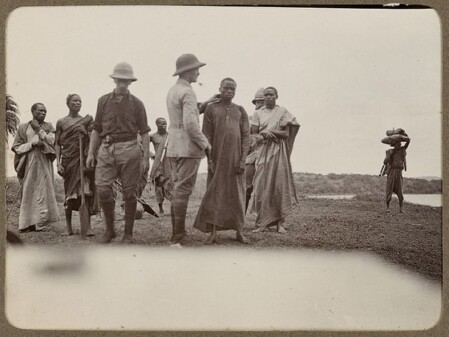
Sleeping sickness patients
He arrived in Uganda in the middle of an epidemic
In 1906 Bell was moved to Uganda where he became the
Commissioner. It was not the posting he
wanted – which was somewhere with a temperate climate with a gentle undemanding
lifestyle. However, he had complete responsibility for the territory and on a
salary of £2000 a year he could look forward to a knighthood in a few months. Uganda
had a population of around 3,520,000 with just 240 Europeans. The ground was
fertile and suitable for settlement and the growth of cotton, but the land was
largely unexplored for European settlement and boundaries were ill defined. What
Bell found on arrival was that anyone who was not white was dying. This had
been the situation for some time with the few Europeans with any medical
experience trying to contain what was in effect an epidemic of what was called ‘sleeping
sickness’, but the cause was unknown. When the medical officer Dr Aubrey
Hodges, based on the north west shore of Lake Victoria, asked the local chiefs to segregate the ill,
they were just sent into the bush where they were either killed by wild animals
or died. Three doctors were then sent out from England to begin a
bacteriological study at a laboratory in Entebbe, but the cause of the sickness
could not be located. The illness had
first been discovered by Dr Albert Cook of the Church Missionary Society at
Kampala in 1901 when patients were coming to him with fever headaches and vomiting and wanting to sleep
but not being able to do so.
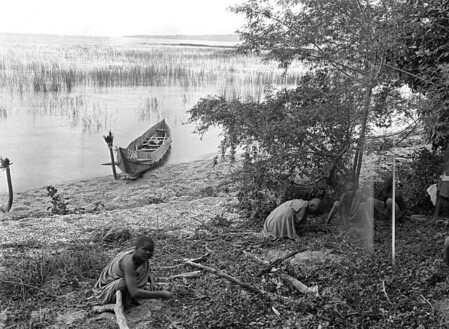
From the Sleeping Sickness Commission Uganda
Thousands continued to die and by the end of 1903 the death toll had reached 90,000 with whole villages being infected. By the time Bell arrived in 1906 the death toll had reached 200,000. The doctors wanted more help from the colonial administration which Bell agreed to make available.
Within three days of arriving in Entebbe, Bell was fearing that the place was malarious. There were three cases of blackwater fever and three of his own servants were sick. He himself was not feeling well and when his secretary was diagnosed with dengue fever, Bell began talks with Hodges about the sleeping sickness. Hodges had a dedicated team of six medical officers but traveling in the bush amongst wild animals their work was hard.
The team eventually concluded that the tsetse fly, which they believed responsible for the sleeping sickness, lived mainly near open water overhung by scrub. They discovered the fly could bite through clothes and could be conveyed from man to man. Bell himself travelled around the territory and found the people reluctant to trust white doctors.
A new railway
As well as investigating the effect of the tsetse fly, Bell wanted to link Uganda up with the Sudan, so that it could link up with the Nile. Accordingly, he had 1,000 men construct a road of 35 miles between Jinja and Kaboge. Bell was impressed with Uganda’s possibilities. The soil was fertile, and he envisaged bringing indentured Indians and Chinese to set up agricultural settlements and model plantations. He did not foresee Uganda becoming a place for Europeans. He did not see the land as anything other than a ‘black man’s country’. He disliked the way that white settles were taking over Kenya. He believed Uganda provided an opportunity for a stable African state built by its own people and growing cotton, rubber, tobacco, and tea in the highlands.
When Bell travelled through Kakoge, the worst affected region for sleeping sickness and saw the extent of the sickness, with himself being bitten by the tsetse, he determined to find a way of breaking the transmission of the disease. He realised this would have to mean putting the sick beyond the tsetse fly. The people would have to be relocated. 100,000 would have to be moved from the shorelines of the lake. Within two miles of the lake, it was tsetse free. The doctors supported Bell in this, and negotiations began with the local chiefs. A large segregation camp was established beyond the reach of the tsetse and a wide pathway was cleared to give access to the lake for water and fishing. Areas were declared ‘infected areas’ and people moved. The vegetation which harboured the tsetse was then cleared. Within two years of the scheme starting, the infection rate had fallen, and just 82 people had died in the infected regions. In time people we allowed back to their ancestral homes. This method of fighting the tsetse continued to be used until independence in 1962.
Meanwhile Bell continued to improve Uganda, and the people
even began to use elephants as beasts of burden. New roads were built as well
as a railway to the Nile. Tea, coffee, rubber and cotton were introduced, and
Uganda’s economy flourished. Throughout his time in Uganda though, Bell dealt solely
with white officials, rarely with blacks. He never seemed to feel the same
affection with the local African population. Bell left Uganda in 1909, having
laid the basis for a thriving economy.
Bell was an unlikely hero. He was vain, snobbish and
self-righteous but he acknowledged the help of his medical team, his district
officers and his deputy commissioner. However, without the support of the
African chiels he would have been powerless and achieved nothing. He moved on
to Northern Nigeria but came across
independently minded officials who were
used to the system that Frederick Lugard had introduced. Bell lasted three
years in Northern Nigeria before he was sent to the Leeward Islands, before he
was posted back to the West Indies, his favourite location. In 1916 he was
posted to Mauritius as Governor, his last posting.
He had a long and enjoyable retirement, enjoying the golf,
the endless round of dinners and cocktails and the tables of Monte Carlo. He
died in 1952, having never married.
Peter Crowhurst, May, 2021
Further reading:
Williams, Stephanie, Running the Show, 2011