


Jacob Montefiore
A Barbados born, London Merchant
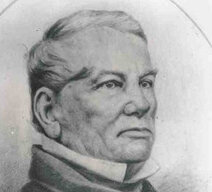
Jacob Montefiore was a Barbados born London merchant who was active in the early colonisation of South Australia, becoming a member of the South Australian Colonisation Association formed to settle South Australia. In 1834, he and his brother Joseph, with who he had established a company that traded and invested in the colonisation of Australia, were living in London when they were involved in applications for compensation arising out of the abolition of slavery in the 1830s.
The lives of merchants like the Montefiore brothers have been highlighted along with many thousands of British merchants by the UCL project on the Legacy of British slave ownership. Whilst the Montefiore brothers did not receive any compensation, they did apply for the compensation for the loss of enslaved people on a Barbados plantation and were appointed as trustees of a trust (for the children of a Mr Taylor) into which was paid the compensation on another estate in Barbados. The UCL project uncovered the extent of absentee slave ownership, with many owners of estates or those with interests in estates living in Britain and never visiting the estates in which they had financial interests. The project also revealed the extent to which merchants like the Montefiore brothers who traded with the colonies also had interests in West Indian plantations. Whilst there is no evidence that the Montefiore brothers had any direct interests in sugar or cotton plantations, it is possible that their father did own plantations in Barbados.

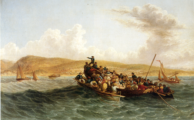
Barbados in 1750
Jacob was born in Barbados in 1801, the son of
Eliezer, a merchant and possible owner of a plantation, and Judith (Barrow).
Jacob lived and was educated in London and became interested in providing
produce to the Australian colonies. He had interests in the Swan River
settlement in Western Australia in 1829 and he had real estate interests in New
South Wales with his brother, Joseph. In the late 1820s Jacob married Justina
Gompertz and in January 1830 they were delivered of their first child, Eliezer.
One of the original Commissioners of South Australia
In 1834 Jacob was appointed by William IV as one of
the original Commissioners of South Australia. The Commission obtained in 1834
an Act of Parliament to allow it to organise the settlement of South Australia
along the lines of a scheme advocated by Edward Gibbon Wakefield. In 1836,
together with Lieutenant-Colonel, Jacob assisted Colonel Light in preparing two
emigrant ships for their journey to Australia. They trialled a new code that
required every emigrant ship carrying more than 100 passengers to have a
medical practitioner aboard and to have minimum deck heights. The code they
adopted was implemented for all migrant journeys in 1839.
Involved in claims for slave compensation
At this time Jacob and his brother were involved in claims for compensation following the abolition of slavery in the British Empire. Whilst we have no evidence that the brothers had any interests in any West Indian plantations, they did apply for compensation for an estate in Barbados.
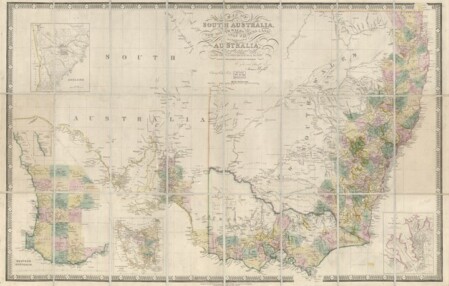
South Australia
An unsuccessful application
The brothers applied to establish a trust for the benefit of the creditors of James S Bascom. Their application was unsuccessful. The brothers though were appointed to be trustees for the compensation that was paid out for an estate in Barbados and the money held in trust for the children of a Mr John Taylor.
Joseph had
emigrated to Australia in 1829 where he established the trading firm of J.B.
Montefiore & Co in Sydney. Joseph
purchased large tracts of land in New South Wales and by 1838 had over 12,500
acres. With his success in real estate Jacob and Joseph helped to found the
Bank of Australasia, which was one of the channels through which English
capital contributed to the boom of the late 1830s. After the depression, the
Montefiore firm in Sydney went bankrupt and Joseph returned to London.
A first visit to South Australia
In 1843 Jacob visited
South Australia, travelling on the Emma and arriving on 21 May. He was received
by Governor George Grey and entertained by the leading citizens of the newly
established settlement. He left in August on the Taglioni and sailed via
Madras. He arrived back in England in January 1844 and on 12 February met the
Under-secretary of the Colonies to urge that he pay £56,000 into the Land Fund
for the emerging colony. During that year, the brothers were subject to
bankruptcy proceedings as their firm collapsed. Jacob’s residence at this time
was in Tavistock Square London.
A visit to Brighton
Jacob visited Australia
again in 1851, when he travelled to Victoria where he took up the position as
agent for the Rothschilds. It was in Melbourne that his youngest daughter,
Victoria Violet, was born. He stayed until 1855, when Rothschilds had to
replace Jacob to put right financial affairs at the company. Jacob returned to
Britain and by the1861 census he was living in Hove at 12 Brunswick Square.
Whether his stay in Hove was a brief stay for his health or a longer stay we do
not know. According to the 1871 census he was living in London, in Upper
Kennington Lane, Lambeth and between 1881 and 1891 he was living in Hyde Park Gardens,
London, and he died in London on 3 November 1895.
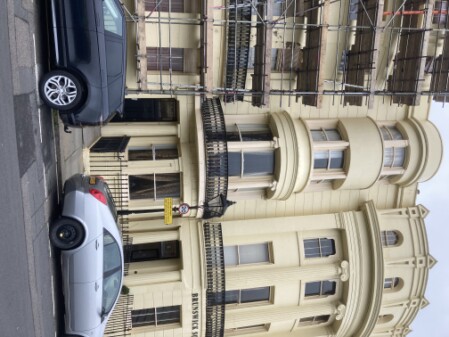
12 Brunswick Square (to the right of the scaffolding)
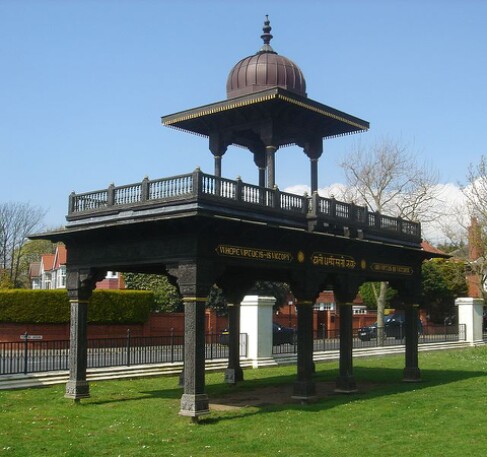
The Jaipur Gate in Hove Museum was part of the Colonial and Indian Exhibition
Whilst back in England
and living in London, Jacob was appointed to be South Australia’s honorary
commissioner at the Colonial and Indian exhibition in 1886. His legacy will be
the city of Adelaide and a permanent reminder of his role in the building of
the city is Montefiore Hill, developed as a lookout as part of South
Australia’s centenary celebrations in 1936.
Related Pages

