



Slave Rebellions in Barbados

Easter Sunday, 1816
On Easter Sunday 1816, slaves on the island of Barbados rose up against their plantation owners in a bid to establish their freedom. Their leader was Bass, or Bussa, an African born slave who worked as a ranger – a head officer among the slaves, on Bailey’s Plantation in the eastern part of the island. As a ranger, Bussa had more freedom of movement to travel around the island and meet and coordinate the rebellion. The sugar cane crop on Bailey’s estate was set ablaze and the revolt spread throughout the southern and central parts of the island. The planters were caught unawares and the military governor of the island, General Sir James Leith, was not even on the island. Barbados was where the British sugar industry first established itself in the Caribbean, with 130,000 slaves being brought to the island between 1640 and 1700. In the early years of Barbados, labour had been supplied by indentured workers, often Irish, and then when they were found to be incapable of working in the conditions, Dutch merchants began to supply the colony with slaves from west Africa. There were a number of slave rebellions in the c18th but they were put down ruthlessly.
Although the British authorities on Barbados had been unaware of the impending rebellion in 1816, Nancy Grigg, one of the intellectual authors of the rebellion, a slave with some education, read the local and English newspapers, and kept other slaves aware of what was going on in Barbados and elsewhere.
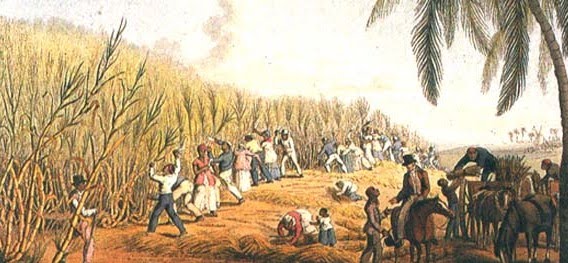
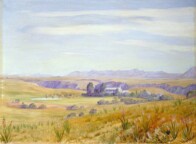
A plantation on Barbados
There were political debates in London taking place at this time about ‘slave registration’ and this may have contributed to slaves thinking that they were about to be emancipated. The Slave Registration Act of 1817 was the result of this debate and required all slaveowners to register their slaves every two years. The plantation owners had regarded such an Act as the precursor to full emancipation and had opposed it, but the London government wanted reform.
Martial Law declared
Following the destruction of a quarter of the crop that Easter Sunday, martial law was declared by Colonel Edward Codd, and at one time a crowd of half-armed slaves was confronted by black troops from the West India regiment. The troops advanced on the crowd with fixed bayonets forcing the slave army to retreat. Slaves who were found off their plantations were shot, and villages burnt down. Almost 1,000 slaves were either shot or summarily executed as the rebellion was crushed in three days.
In the aftermath of the rebellion, 144 slaves were executed and 70 subsequently sentenced to death. The Colonial Secretary was horrified at the scale of executions and ordered that any further slaves found guilty of being involved in the rebellion should be transported, although when plans were made for 123 slaves to be sent to British Honduras, the white settlers in the colony demanded that no slaves convicted of insurrection be admitted. Eventually Bathurst agreed that the convicted slaves could be sent to Sierra Leone, to join other freed slaves, although by the time his decision was acted upon the slaves had been reduced by deaths aboard their convict ship to a hundred.
The lessons for the British
The events on Barbados in 1816 made it quite clear to the London government that the West Indies was only held by military force. The white settlers and planter community remained on their guard and nervous about when the next rebellion would take place.
Barbados 1823
Just before Christmas 1823, slave gatherings on the
Balcarras Estate in St George’s led plantation owners on the island to think
that another rebellion was being planned. The authorities had spies within the
slave communities and claimed that conspiracies had been uncovered in the
parishes of St Mary and St James. The so-called conspiracy in St James proved to be no
more than discussion about possible future freedom which the anti-slavery
campaign had talked about. The slaves on the Frontier estate in St Mary gave
more cause for concern as there had been a rebellion there in 1760, resulting
in eight slaves being hanged, and at the same time seven had been hanged in St
George’s parish.
The following year slaves on the Argyle estate were
accused of slaughtering cattle, thought to be the prelude to a rebellion. The
owners feared a general strike and attacks on whites, and indeed there was one informer
claiming this but there was no further evidence. Six slaves at St George’s were
hanged and a further four at Kingston - much criticised by the authorities in
London as the evidence was obtained by torture. The savage response of the
authorities in Barbados was enough to prevent any more talk of rebellion in the
next seven years but in 1831 a general uprising took place in Jamaica which was
a major factor in the passing of the bill to abolish slavery in the British
Empire. The rebellion on Barbados had helped to create doubt about their safety
and the long term viability of the sugar industry amongst many in the the
white community, and along with the Jamaican rebellion of the early 1830s,
helped to convince Parliamentarians of the need for the abolition of the slave
trade.
Related Pages