1815-1914

What was the ideology of the 19th century British Empire?

.
A Private Enterprise Empire
The British Empire that Edward VII inherited in 1901 was a private enterprise empire created by merchants, investors, migrants and missionaries with the government acting in a support role. Each of these groups had their own needs and interests and vision for how they wanted colonies to develop and often their interests clashed. Migrants wanted to colonise, civil servants in London wanted to civilise, missionaries wanted to convert, and merchants wanted to make money and officials in the Colonial Office had to act as the umpire between often conflicting interests. The Empire included people of many different religions and languages living in very different parts of the world governed, all with very different cultures. The British Empire was described by John Seeley, author of the best-
From the time that the empire was established in the Americas in the early c17th until the First World War, the dominant motive was trade and the pursuit of wealth, but alongside these constant objectives there was always a moral or religious motive for empire. The East India Company was the first private company created (in 1600) and existed to trade with spice suppliers in the East Indies in 1600 but just twenty years later a charter was given to Calvinists to create a colony where they would be free to worship in their own way. The moral element was a constant influence on the making of Empire and in the c19th the Mission to Civilise became an important justification for the territorial expansion in Africa in the last quarter of the century.

The British Empire was ‘a rag bag of territorial bits and bobs’, and had little coherence being the work of different groups, each with their own
objectives.
Another constant feature of the British Empire was the lack of any effective central imperial control. The imperial government acted to provide military support to support British trading ventures and to mediate between competing interest groups but with communications poor until the late c19th, colonies had to deal with threats to their existence in their own way. Throughout the first two phases of the British Empire, the imperial government was kept aware of the changing geopolitical arena and policy was often made to deal with potential threats as seen by political officers on the ground. In the period before the Napoleonic Wars the imperial government had to be aware of threats to British territories from Spain, France and then the independent United States. Later in the c19th the main threat to the empire was seen to come from the rise of Russia in central Asia. Predicting a future threat was difficult and in the Great Game British spies would travel deep into Asia to try and ascertain the viability of the Russian threat.
The pursuit of trade, religion and geopolitics were all important in the first phase of the British Empire. When James I granted a charter to the Virginia Company in April 1606, it was in the expectation that the colony would soon be able to provide Britain with those raw materials that she relied on from other countries. The settlers who sailed into Chesapeake Bay in 1607 and founded Jamestown hoped to find a climate that was temperature enough not just to provide the timber to build ships in the dockyards of Britain but to provide the mother country with wines and fruits.
In these early times of the British Empire, the prevailing economic orthodoxy was Mercantilism -
Much was done to assert Britain's dominance over colonial commerce . The navy was expanded, and the colonies had to conduct their trade in British owned ships. Non-
At the end of the eighteenth century, virtually all of the products of the non-
These early chartered companies had the full support of Parliament. There existed the hope that in time settlements in the Americas could make Britain self-
By 1700 thirteen British colonies stretched along the North American coast and a number of colonies existed in the West Indies. The Barbados Company had received a charter from Charles in 1627. They hoped to make money from tobacco as Virginia was now beginning to but it wasn't profitable and they tried switching to cotton before eventually in 1643 planting sugar which saved Barbados. Within fifty years sugar plantations covered four fifths of the island and this sugar revolution transformed the economies of the West Indies. The success of Barbados quickly led to the occupation of other islands by settlers but not without bringing conflict between native people and other European powers.
The pursuit of wealth was always the prime motive for establishing new colonies but from the beginning of the Empire in the Americas until the end of empire in the 1960s there was a moral imperative. The Pilgrim Fathers who settled in Massachusetts in 1620 had come to America to find a place where they old follow their religion in the way they wanted. The settlers were Calvinists who wanted to be separate from the English Church. Quarrels over the level of religious freedom that should be tolerated continued in the established colonies so that by 1660 there were settlements of about 30,000 in New England, many of whom left as a result of arguments about their own beliefs. Rhode Island and Maryland were both settled by religious refugees.
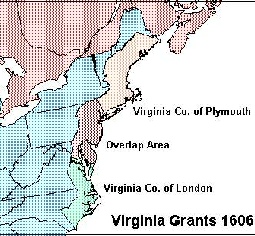
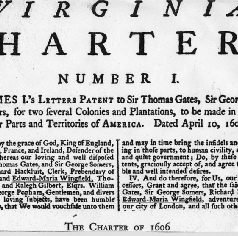
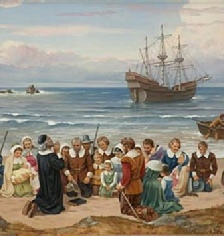
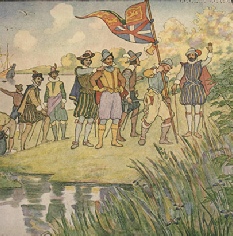
The grants of land made by James I, left, the Virginia Charter of 1606, the landing of the Pilgrim fathers and the landing of the Jamestown settlers.
Religion was not just the cause of further colonies being established: it was used by the early settlers to justify taking over land from native peoples. America was described in a sermon in 1609 as a 'land which had been wrongly usurped by wild beasts and unreasonable creatures'. The view that America was a richly endowed virgin awaiting a husband was a commonly held view at the time and at the heart of the English justification for taking America. John Milton wrote that 'God having made the world for the use of men….ordained them to replenish it'. It became the duty of settlers, as they saw it, to make best use of America's abundant resources if native people failed to recognise their won inheritance. It was to be a feature of much of the British Empire that recourse was made to God to justify the extension of the empire by taking the lands of native peoples. In the late c19th this was to become a virtual ideology of the empire -
Between 1790 and 1830 the British Empire was transformed as a number of elements came together to create the conditions for the rapid expansion of the empire. The American colonies had fought a War of Independence to free themselves from Britain in 1783 yet this had little impact on trade with Britain. But what did change was that Britain was to create a second empire in the east with India as its focal point. With population increase in Britain acting to encourage rapid agricultural and industrial change, an evangelical revival which led to the development of mission stations abroad and the military and naval dominance of Britain made possible by the victories at Trafalgar and Waterloo, the conditions were created for Britain to develop the larges empire in history.
There was also growing consensus that the prevailing economic orthodoxy of mercantilism was out of date and holding back industrial development and limiting Britain's ability to sell abroad. In the years after 1815 there was growing pressure on Parliament to abandon the laws enforcing mercantilism and free up trade. The argument was that if duties on imported goods were abolished raw materials would be cheaper and so the exports of manufactured goods would be cheaper. this in turn would encourage other countries to buy more from Britain. The Anti-
In the 1820s, William Huskisson at the Board of Trade allowed foreign countries to trade with colonies, then lowered duties on a number of imports and also relaxed shipping regulations to allow foreign ships into Britain's and the colonies' ports. In the 1830s deregulation continued under the Whig government and in the 1840s the Conservative government of Peel reduced import duties on a wide range of products and then following the famine in Ireland repealed the corn laws. In 1849 the Navigation Acts were repealed and in the 1850s Gladstone removed the remaining tariffs on imported goods.
With trade being freed up by the deregulation of duties, and with Britain having a commanding lead in the manufacture of factory made goods, Britain's industrialists sought new markets and expanded production. In the 45 years following the end of the Napoleonic Wars Britain was responsible for 60% of the world's trade with Britain producing 50% of the world's trade in coal, cotton and iron. Despite the repeal of the Navigation Acts, a third of the world's trade was carried in British ships. Much of this increase in trade for Britain was with the USA and Europe which accounted for over 60% of the £50 million earnt in 1827. The pattern of trade for Britain continued for much of the century with new markets being found not in the British Empire but in Latin and South America, the Middle East and China. In 1867 when exports from Britain amounted to £181 million, exports to non-
This period of economic expansion coincided with a period of imperial expansion as the empire increased form just over 2 million square miles in 1837 to over 12 million square miles in 1901. It had come about through the efforts of private investors and businessmen. The imperial government had deviated little from the policy of minimum interference. One of the constraints of being a Parliamentary democracy was the need to keep a close watch over the purse strings. There was not the money to establish large overseas establishments with civil servants manning the administration and soldiers keeping order from their purpose-
During the 19th century though, the empire acquired a moral dimension, which defenders of the empire claimed made the British Empire different from any other empire in history. The moral element was used to justify the extension of the Empire which expanded from just over two million acres in 1837 to nearly twelve million acres by 1901.
This moral element arose out of the massive confidence which the British felt about their empire at a time when Britain was workshop of the world and at a time when there had been an evangelical revival. As N Ferguson has said 'The 18th century was amoral. the Victorian empire was quite different as the Victorians saw their duty to redeem the world and to improve other races.'
Palmerston said of the British and their empire in 1848, 'Our duty -
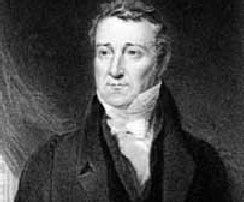
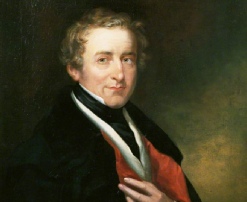
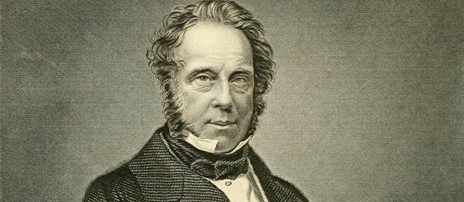
These three men laid the groundwork for the British Empire being considered an Empire based on liberty and free trade. Huskisson, far left, Peel, centre and Palmerston.
The Mission to Civilise
This 'Mission to Civilise' the world arose out of the evangelical revival of the late 18th century which produced the political campaign to abolish first the slave trade and then slavery itself. The evangelical revival became more urgent in the last decade of the 18th century as the end of the century drew near and with the possibility of invasion by the French imminent. The evangelical revival stressed the need for individual salvation and personal redemption, holiness and a purposeful life. Central to evangelicalism was the study of the bible and translating it for native people abroad. It was thought that the bible held the truth about the human race. This establishment of a missionary revival became an important part of national identity.
During the early 18th century the idea of missionary activity abroad was criticised as a waste of energy when there were so many heathen souls to be saved at home but by the 1790s an optimistic view prevailed about humanity. It was then accepted that all individuals were capable of salvation and it just required being introduced to God. It was possible for all mankind to receive salvation for their wickedness. With this view prevalent, it became acceptable to establish missions abroad. With the voyages of Captain Cook having opened up the world to the British people in the 1770s, there were plenty of souls abroad that could be saved by missionary activity and the British began a century of sending missionaries abroad to convert native peoples.
The Founding of Foreign Missions
William Carey, who almost singlehandedly founded the Baptist Missionary Society in 1792 with a mission in India, was at the time criticised for his views on foreign missions but following the founding of his society other missionary societies soon followed. In 1795 the London Missionary Society was founded and focused its activity in southern Africa. A year later the Scottish Missionary Society, an interdenominational society, was founded and also focused its work in Africa. In 1799 the Anglican society, the Church Missionary Society, was founded and established missions in southern Africa. The work these organisations did around the world together with the campaign to abolish the slave trade helped to produce an attitude that Britain held the moral high ground. Following the abolition of slavery in the empire in 1833, Britain established a naval patrol in west African whose job was to catch slave traders. Britain also tried to persuade other countries to abolish slavery and allow their ships to be stopped by the Royal Navy.
With the development of the industrial revolution after 1815, the British nation felt a confidence about themselves and their role in the world that bordered on arrogance. the British began to feel they were a chosen race ad that it was their destiny and humanitarian duty to combat ignorance, alleviate suffering and brig western civilisation to the world. One of the earliest missionaries, the Reverend Marsden, said of the Maori that the spread of the knowledge of the works of Christ would be the making of the Maori and the development of them as a great nation. For some missionaries, their work was seen as an atonement for the slave trade.
Letters about the work of missionaries were sent home and helped to raise awareness among the general public about the work of missions and the necessity of their work. Missionary work became the focus of many churches and chapels and money was raised to further the work they did. When missionaries returned from India and Africa they held meetings to talk about their experiences and to generate further interest and by the middle of the century there existed an army of helpers that supported those working in the field.
In the late Victorian era, attitudes towards native peoples changed and the question of race began to be discussed. This was the era of New Imperialism when imperial questions began to dominate the political stage as emerging European countries began to see the creation of empires as necessary to a successful economy. Britain’s economic and industrial hegemony began to be challenged and politicians and commentators began to promote the growth of empire as the answer to the challenge from the USA, Germany, France and Italy. To justify the annexation of new territories and the subjugation of indigenous people, writers like Herbert Spencer wrote of the ‘Survival of the Fittest’.
The Development of Race as a subject for Pseudo Discussion
One of the first writers in Britain to write about race was Robert Knox who is perhaps better known as the doctor associated with Burke and Hare, the body snatchers from Edinburgh. Knox had been an army surgeon in South Africa where he was to see for himself the relationship between the Boers and native peoples. As a result of his time in South Africa Knox published in 1850 a best-
The publication of Darwin’s Origin of Species (1859) and The Descent of Man (1871) and the subsequent debate about the nature of race polarised the debate about race. Darwin had left unresolved the question as to whether human races were sub-
Interpretations of Darwin's work suggested that racial differences had existed for millions of years prompting a discussion about the importance of race as a determinant of human progress and raising doubt about whether missionaries would be able to civilise native peoples. Anthropologic societies were founded all over Britain. Dr James Hunt openly said that some races could never be civilised. The explorer Richard Burton went as far as suggesting that the African needed to be removed from Africa to experience improvement. Many missionaries became disillusioned with their work and in areas like Nigeria and New Zealand, little was achieved by missionaries for several decades.
The development of ideas on Social Darwinisn provided the evidence that the British needed to support the view that the British were a chosen race, chosen to bring development to the undeveloped world they administered. If Britain was to prepare colonies for independence, and this had to be the logical outcome of Britain’s claim to be civilising countries, there was a complete silence on the question of when Britain would hand over the responsibility of government. There was a generally held view that the Empire was a good thing and that the peoples of the empire benefitted from British administration, but it was also generally accepted that if Britain withdrew from the colonies then chaos would ensure.
In India when there was an attempt in 1883 to develop the range of Indian judges’ jurisdiction, in the Ilbert Bill, there was an outcry that Indian judges might preside over cases involving Europeans. There were reforms in the colonies, especially in India, but the reforms were just a form of appeasement designed to dampen down the fires of discontent. Reform went hand in hand with repression
The British began to trust native peoples less than they had done as attitudes hardened. In India the Raj developed with the British creating enclaves which were recreations of little England with houses, customs, entertainment and food giving a feeling of being at home. what the British did not do was to question their attitudes. The feeling that the British were a superior race by virtue of what they had achieved economically and culturally if anything grew stronger and became an important part of the New Imperialism of the last quarter of the century. Whereas Christian communities had been behind the spread of British values in the earlier part of the century, it was now left to the secular world to promote the notion of it being the role of the British to export their way of life. It was John Ruskin in 1870 who declared it was the role of the British to found colonies and then send her best men to teach colonists to be faithful to Britain. Two years later Disraeli put the empire at the centre of politics when he said that the British could remain comfortable and insular or become a great nation, an imperial nation that commanded the respect of the world.
By the 1880s, the intellectual ascendency had been won by those advocating racial difference and racial stereotyping. Typical of the writers contributing to the debates about race was Augustus Keane who although a believer in monogenesis was regarded as a racist. Not only was race being debated by pseudo-
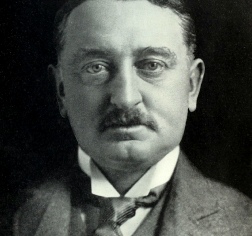
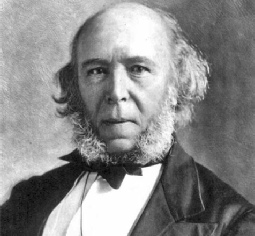
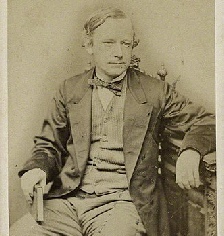
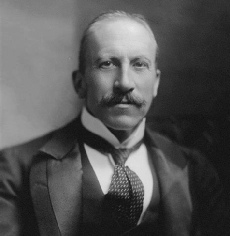
Cecil Rhodes, left, Herbert Spencer, John Seeley and Alfred Milner all contributed to the debate on race in some way in the late c19th.
An Empire of Liberty
An idea at the heart of the British Empire was the idea that it was an empire of liberty, especially when compared with empires that existed then and previously. Britain had a liberal Parliamentary constitution which was able to impose constraints on the actions of colonial authorities and residents, and Britain governed in a way that allowed for a degree of local self-
The British believed their empire was a liberal empire. They saw it as a force for good, bringing development and civilisation, if even at times British forms of government and her preferred trading system had to be forced on indigenous populations. Free trade was seen as morally good , and a form of trade that was linked to the spread of free speech, ideas and free movement.
The British Empire had developed through the efforts of private enterprise but when the privileges accorded the private company were abused parliament was ready to step in. In the 1770s, Parliamentary investigations into the East India Company (HEIC) conclude that a despotic form of government had been established by the nabobs and elite with the HEIC that went right to the heart of the administration in India. Huge amounts of money were being made by the Company’s servants, often through the extortion of local people. Eventually parliament passed the Regulating Act, to make clear the imperial government’s right to oversee the running of British held India. This was the first in a number of Acts that restricted the power of the HEIC which eventually in 1858 had all its power taken away and ceased to exist.
The influx of evangelical MPs from the 1790s also resulted in the abolition of first the Slave trade and then Slavery in the Empire. Having abolished slavery, the House of Commons set up a committee to oversee the treatment of indigenous people in the Crown colonies.
The American Revolution had taught the imperial government the dangers of not allowing a degree of self-
The Influence of ‘the Man on the Spot’
The Crown Colonies were usually governed by an official appointed by the Colonial Office who was able to rule more or less as he wished. In many cases Governors of Crown Colonies rules in a benevolent way and sought to introduce reforms to improve living and working conditions although sometimes as with the case of William des Voeux, the pressure from local businessmen was such that to defend the rights of local native workers became difficult. William des Voeux was forced to leave his job as a magistrate in British Guinea because he tried to improve local working conditions against the wishes of local plantation owners. He went to St Lucia where he worked hard to introduce reforms to benefit local people and was later a successful Governor of Hong Kong. There were many other Governors or local officials like des Voeux but there were also colonial officials that worked to use their position to destroy local culture and the power of indigenous people. Such a man was Bartle Frere who having been sent to South Africa at the end of his career sought to destroy the power and the culture of the Zulu people, and engineered a war against them which led to the British disaster at Isandhlwana in 1879. Cecil Rhodes did much the same in 1893 to destroy the Matabele people, and much of the blame for bringing about the Second Anglo-
Conclusion
Given that the British Empire had little coherence, having been established in a random and unplanned way by private enterprise there were often conflicting ideas about the empire. There were though some ideas that were central to the success of the British Empire. Firstly, the preference was always to work through informal agreements with local elites rather than annex colonies and if this a not possible to conduct treaties which allowed for local elites to continue to rule but with the Crown representative overseeing local rule. Secondly the rule of local elites or the Colonial Office’s ‘Man on the Spot’ was monitored by the imperial government and Parliament to ensure that rule was always consistent with the values of the British. Thirdly, representative government was conceded to some colonies, and in the c20th was granted to many more, usually a way of heading off some further unrest or rebellion. The British Empire did allow for government at the local level and although reforms in no way matched the level of democracy we have today, it was considered at the time to be a first step towards the establishment of a level of local democracy that was commensurate with what had been granted in the Mother land.
Pter Crowhurst, June 2019
Further reading:
Unfinished Empire by John Darwin, 2012
The Rise and Fall of the British Empire by Lawrence James, 1998
Raj, The Making and Unmaking of British India by Lawrence James, 1997
Running the Show by Stephanie Williams, 2012