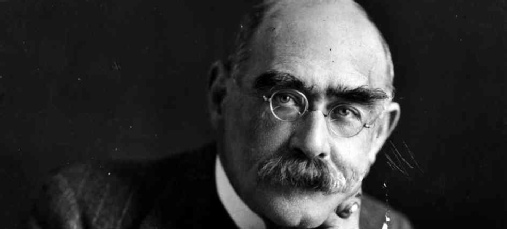
Rudyard Kipling lived in Rottingdean, a small village just four miles from Brighton, for only five years that they were to be years that had a huge impact on his life, his writings and how he was perceived. Kipling and his wife Carrie moved at the age of 32 with their young family initially to the holiday of his aunt, Geogiana Burne-
For the next five years the family were to experience joy but also great sadness. The family began to set down roots and establish a sense of place but the death of Josephine in America in March 1899 and the onset of the Boer War changed Kipling. He became a sadder and a harder person, difficult for others to reach and understand. He produced some outstanding work like ‘Kim’ that was praised by the critics but also began to produce work that reflected his journey into politics.
Kipling’s defence of the Boer War and his criticism of the way it was being fought resulted in his producing a lot of material that focused on the war -
By the time the Kipling family left Rottingdean in September 1899 to move to Batemans, near Heathfield, Kipling’s reputation was not what it had been. He was still producing highly acclaimed verse and prose, but less often. He had acquired a love of the Sussex countryside and the family could feel that they at last had a ‘home’ in England but he remained a man who was deeply affected by the death of his daughter Josephine in 1899 and the Boer War.

North End House, Rottingdean, the holiday home of Edward Burne-
The Elms, Rottingdean, which was leased for 3 guineas a week.
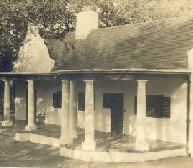
‘The Woolsack’, a guest house built for the Kiplings by Cecil Rhodes whilst they were staying in South Africa.

‘Batemans’ the house in the Sussex Weald to which the Kipling family moved in September 1902.
1815-1914
