1815-1914

The Road to War, 1895-

A German dominated Transvaal
The spectre of a German dominated Transvaal occupied the minds of Salisbury and Chamberlain the new Prime Minister and Colonial Secretary in 1895 and following the Jameson Raid, the possibility of a German involvement in the Transvaal. With the failure of Rhodes' scheme to find sufficient quantities of gold in Matabeleland and Mashonaland, Rhodes knew that his scheme for a Cairo to Cape Town railway as the precursor to a British dominated eastern and southern Africa depended on the destruction of the Boer republics.
The Transvaal under Kruger was becoming more and more economically and politically independent. A railway to Delagoa Bay was opened up in 1894 obviating the need to use Cape Town for imports and exports. To make it more difficult for the Cape Colony, Kruger imposed steep haulage tariffs on the railway between Transvaal and cape Colony and then blocked the use of the drifts across Transvaal territory.
Implications of the Jameson Raid
To try to bring about the destruction of the Transvaal, Rhodes planned an overthrow of Kruger's regime. Rhodes got enough assurances from Uitlanders to convince himself that it was possible to overthrow Kruger by an uprising of Uitlanders and then invite Britain in to provide protection. Rhodes believed he had sufficient support within south Africa -
The failure of the uprising had huge implications for all those involved. Rhodes was forced to resign as Prime Minister of the Cape and had to give up his position in the Chartered Company which controlled Rhodesia. Jameson was eventually tried in England and sentenced to 15 months imprisonment. In England there was outrage at what people believed was Britain's involvement and a Committee of Inquiry was set up but the British establishment closed ranks and the involvement of Chamberlain was suspected but never proved. The raid had international repercussions at a time when Britain was diplomatically isolated. She was heavily criticised by her Imperial rivals France and Russia, and the Kaiser sent a telegram to Kruger congratulating him on the success with which they had dealt with the threat to their independence.
The worsening political situation: The British leadership
It is difficult to determine the exact cause of the subsequent conflict. There were important strategic, political, diplomatic and economic factors all of which played a role. Britain needed to protect its shipping routes to the Far East and Australasia. Britain in an age of new Imperialism had to show that it would not be pushed around by small nations at a time of Imperial competition. The Boers were regarded by many as an inferior race and in need of advancement. The gold in the Witwatersrand was essential in keeping London's traditional position as leader of the world's money market. These were all factors but although there was a clash of cultures could the conflict have been avoided? If gold had not been at the centre of the Transvaal's economy would there have been an accommodation between peoples that knew each other well and between whom there was intermarriage and mutual business and commerce?
Peace was made all the more difficult though by the personalities who came to dominate south African politics between 1895 and the outbreak of war in October 1899, and chief amongst those personalities was Lord Alfred Milner who was determined to establish British supremacy in south Africa.
Alfred Milner
Lord Alfred Milner was High Commissioner in South Africa when war broke out in October 1899. Whereas Salisbury and Chamberlain were not enthusiastic supporters of a war policy, Milner came to realise that war was the only option if Britain were to reassert its position in southern Africa. Milner had been appointed by Chamberlain in 1897 to reassert Britain's position following the disaster that was the Jameson Raid but he grew tiresome of Chamberlain's waiting game and did all he could to hasten a conflict with the Boers. With the re-
When he was appointed High Commissioner from the Board of Inland Revenue, Milner had clearly formed ideas on Empire. He believed that Britain was a nation and empire in decline. He wanted more from South Africa than just revenge for Majuba. Revenge for him was crude. He wanted world supremacy for the British empire-
He believed that throughout the empire successive governments had followed a weak and negative policy so that British power was being weakened, especially with the granting of self government to more and more colonies. Although many new 'black 'colonies had been added to the Empire in the scramble for Africa, had these colonies added anything to the wealth and power of the Empire. Milner wanted Britain to re-
The discovery of gold on the Rand seemed to reverse the roles of the white peoples in southern Africa. The Cape Colony, a British colony had a majority of Afrikaners among the white population whilst the Transvaal, after 1886 became a Boer state being rapidly industrialised with the majority of its people British.
Milner reached the Cape in May 1897 after his appointment as High Commissioner and soon set out on a tour of the country to acquaint himself with the country and its people. For 8 months he travelled through the Cape, Natal, Bechuanaland, Rhodesia and Basutoland to try and understand the views of the Cape Dutch and the burghers of the OFS and Transvaal. He came to the conclusion that there could be no hope of peace with the Boers whilst the question of the 'uitlanders ' remained unresolved. Increasingly the issue though was not the position of the uitlanders, many of whom were not British and did not care for the vote anyway-
In a 3 March 1898 speech delivered at Graaff Reinet, an Afrikaner Bond stronghold in the British controlled Cape, Milner outlined his determination to secure freedom and equality for British subjects in the Transvaal, and he urged the Dutch colonists to induce the Pretoria government to assimilate its institutions, and the temper and spirit of its administration, to those of the free communities of South Africa. The effect of this pronouncement was great and it alarmed the Afrikaners who, at this time, viewed with apprehension the virtual resumption by Cecil Rhodes of leadership of Cape's Progressive (British) Party.
In November 1898 Milner returned to Britain to press his case for a more forward policy to force the issue with Kruger whose position had become stronger since the Jameson raid. On 22 November he met with Chamberlain. Chamberlain would not deviate from a patient policy-
Milner returned to South Africa determined to use the question of the rights of the 'uitlanders' to put pressure on Kruger. The 'randlord's would have to be manoeuvred into a position to support the claims to be made of Kruger's government.
Killing of Tom Edgar
A few days before Christmas 1898, Tom Edgar a boilermaker form Bootle, Lancashire was shot by a SA policeman. To many 'uitlanders' his shooting seemed like murder and it acted as a spur to the reform movement which had died after the raid but was now ignited. Fitzpatrick was the leading light amongst the reformers and he helped to form the South African League, a new imperialist group that had been negotiating with the government to improve the conditions for British nationalists (including Coloureds from Natal). When Fraser (Milner's deputy) met with Smuts to discuss grievance of the coloured -
The verdict of the trial (acquittal) was enough to keep the 'uitlanders' in uproar.
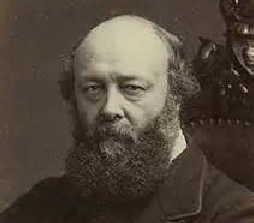
Top: Chamberlain(left) and Lord Salisbury
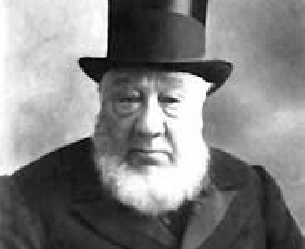
Above: Kruger
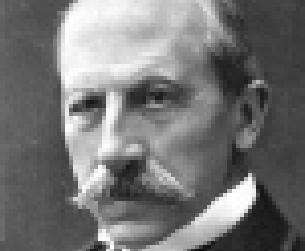
Below: Lord Alfred Milner